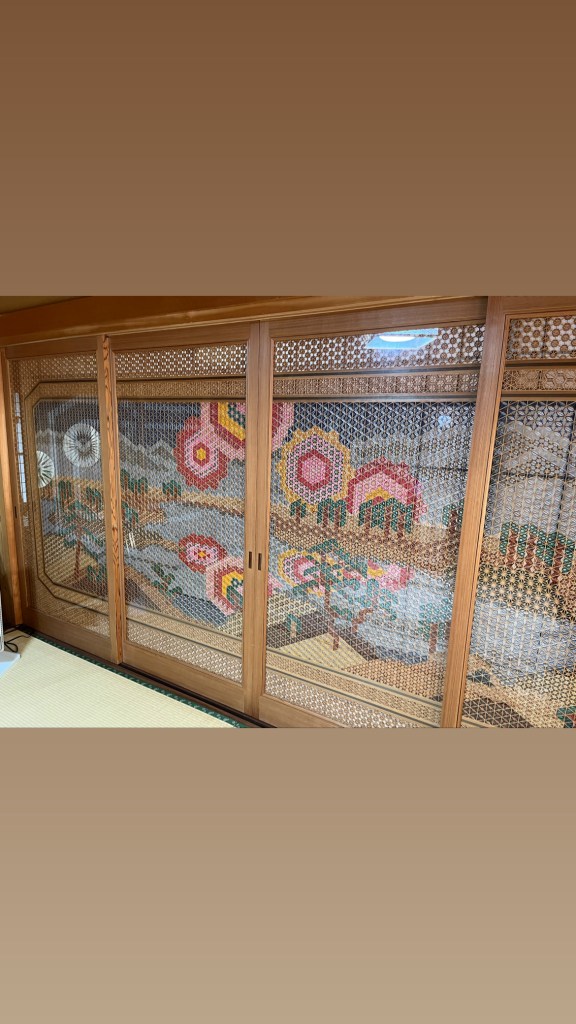
Traditional Japanese minting, or Kumiko, are crafted by joining pieces of wood together without the use of nails. It is one of Japan’s traditional crafting techniques, developed alongside Shoin-zukuri, a traditional Japanese architectural style, in the Muromachi era (1336-1557) the technique was used in making the wooden fittings of the windows, Shoji (paper sliding doors) ranma (transom), and so on. Cutting up a draft into 1.5mm wooden pieces, cuts and tenons are added to create wooden joint designs. Muntin created by the above method is what we call Kumiko. For some designs, over 100,000 pieces of wood can be used, ever single of them are over 100 design patterns, and beautiful and original Muntin are made by combining these patterns.
日本の伝統工芸である組子(くみこ)は、釘を使わずに木と木を接合して作られる。 日本の伝統工芸のひとつで、室町時代(1336~1557年)には書院造りとともに発達し、窓や障子、欄間などの木製建具に用いられた。 下絵を1.5mmの木片に切り分け、切り込みとほぞを入れ、木製の継ぎ手模様を作る。 このような方法で作られた文様が組子である。 デザインによっては10万個以上の木材を使用し、そのひとつひとつに100以上のデザインパターンがあり、それらを組み合わせることで美しいオリジナルの組子が出来上がる。
 Innovative Experience Travel Japan
コメントを残す